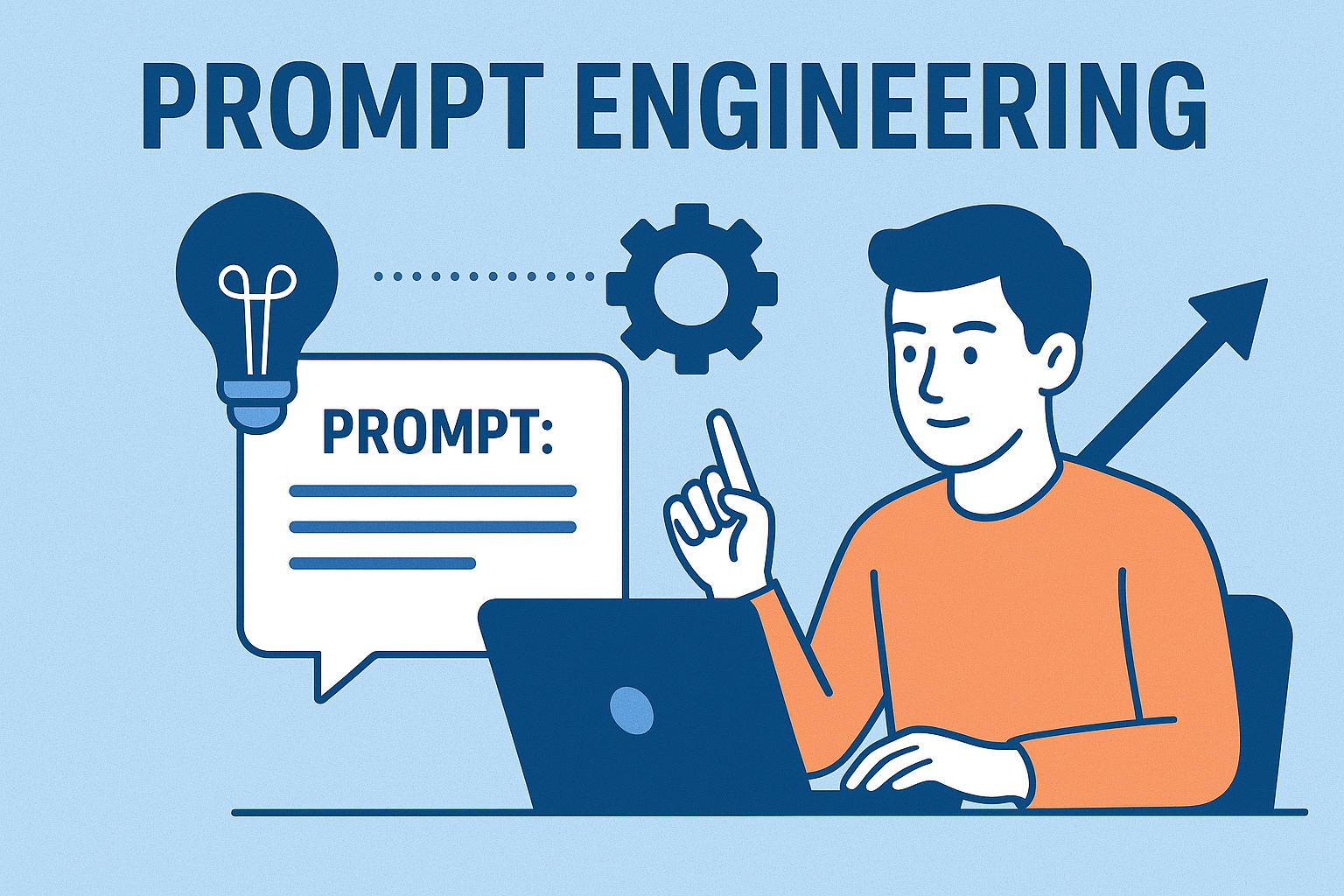
What is Artificial Intelligence?
A simple guide for anyone.
Artificial Intelligence, or AI, is technology that allows computers and machines to learn from information, recognize patterns, solve problems, generate content, and make decisions in ways that can feel surprisingly human.
You are probably already using AI every day
If you have used Google search, autocorrect, a smartphone assistant, Netflix recommendations, navigation apps, fraud detection, self-driving technology, or ChatGPT, you have already interacted with AI—sometimes without even realizing it.
Search engines use AI to understand intent and rank useful results.
Smartphones use AI for voice assistants, photo enhancement, autocorrect, and recommendations.
Streaming platforms use AI to predict what movies, music, and videos you may enjoy.
Generative AI tools can answer questions, draft content, summarize, brainstorm, and assist with learning.
How AI works in simple terms
A simple way to understand AI is to imagine teaching a child by showing examples, pointing out patterns, and giving feedback.
Teaching AI to recognize a dog
Show an AI system thousands of labeled dog images. Over time, it learns visual patterns such as shape, features, texture, and structure. It can then use those learned patterns to identify a new dog image it has never seen before.
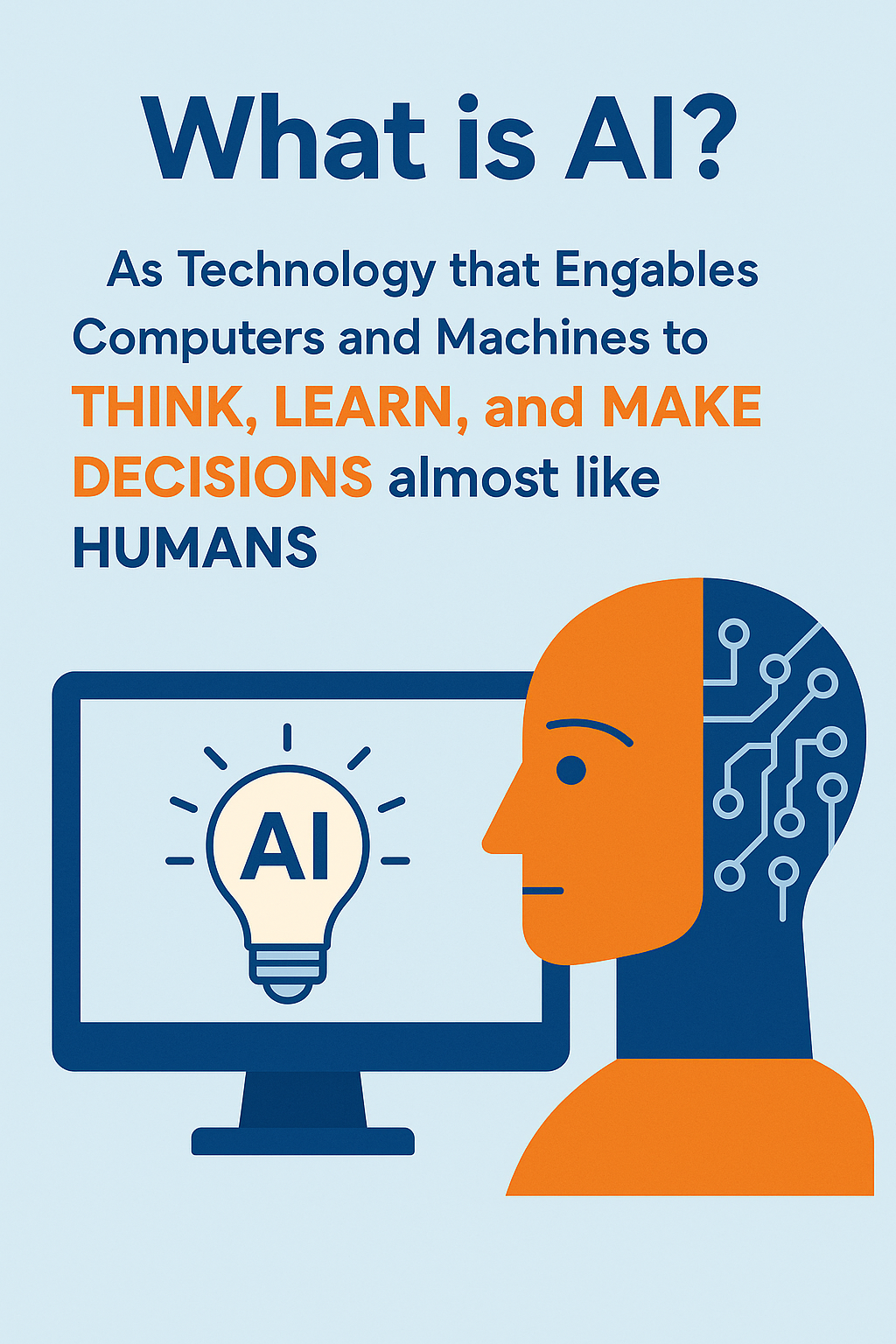
AI is already helping people work, create, analyze, and build
Modern AI systems can support many different kinds of work. The value comes from using the right tool for the right problem—and verifying the result.
Understand and generate language
Summarize, translate, explain, draft, rewrite, brainstorm, and answer questions.
Analyze large amounts of data
Identify patterns, compare information, organize findings, and surface useful insights.
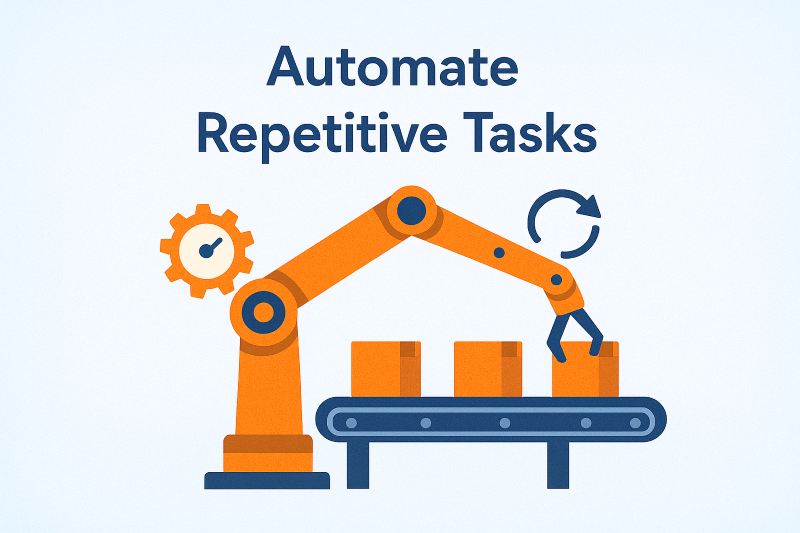
Automate repetitive tasks
Reduce manual work by helping with repeatable processes, routing, documentation, and workflow steps.
Create images, designs, and video
Generate visual concepts, storyboards, graphics, media ideas, and creative variations.
Help build apps and software
Assist with coding, debugging, documentation, testing, prototyping, and technical learning.
Support data-driven decisions
Help people compare options, inspect trends, test assumptions, and make more informed decisions.
AI is becoming part of how the world works
AI is not just another technology trend. It is becoming a foundational layer across education, business, healthcare, software, finance, transportation, media, security, and many other industries.
In the future, more jobs will include some form of AI-assisted work. People who understand how to use AI correctly, safely, and effectively will have a major advantage.
can study, research, and practice more effectively.
can improve productivity and reduce repetitive tasks.
can research, test, and build ideas faster.
can generate, refine, and scale creative work.
can use technology to solve local problems in new ways.
AI will continue moving into nearly every major industry
The next phase of AI will be less about a separate “AI industry” and more about AI becoming built into the tools people already use.
Research, imaging, administration, patient support, and clinical decision support.
Tutoring, adaptive learning, accessibility, curriculum support, and practice.
Planning, scheduling, safety analysis, design support, and project optimization.
Routing, logistics, predictive maintenance, autonomous systems, and traffic optimization.
Risk analysis, fraud detection, forecasting, research, and operational automation.
Threat detection, anomaly analysis, incident triage, and defensive automation.
Production tools, creative workflows, recommendations, effects, and interactive experiences.
AI can help people attack problems that once felt too difficult or too expensive
Technology alone cannot solve poverty, inequality, education gaps, or unequal access to opportunity. But AI can become part of the solution when it is paired with human judgment, good policy, responsible design, education, and access.
Access to knowledge
AI can help make complex information easier to understand and easier to access.
Faster learning
People can ask questions, practice concepts, and explore new skills at their own pace.
Lower barriers to building
AI can reduce the time and expertise required to create first drafts, prototypes, and ideas.
More opportunity to compete
Individuals and small teams can use AI to perform work that once required much larger resources.
Why AI should matter to you
AI is not just a tool. It can become a force multiplier for anyone willing to learn how to use it. Whether you want a better job, want to start a business, build an app, improve your education, or change the direction of your life, AI can help you learn faster, think more clearly, create more, and discover opportunities that may not have existed before.
“AI is the future and the future belongs to those who understand how to use it.”